Mexico has established itself as a global logistics hub. However, the marine environment at the ports of Manzanillo, Lázaro Cárdenas, and Veracruz is extremely corrosive. Keeping ship-to-shore (STS) cranes and container handling systems running 24 hours a day requires foolproof data transfer technology.
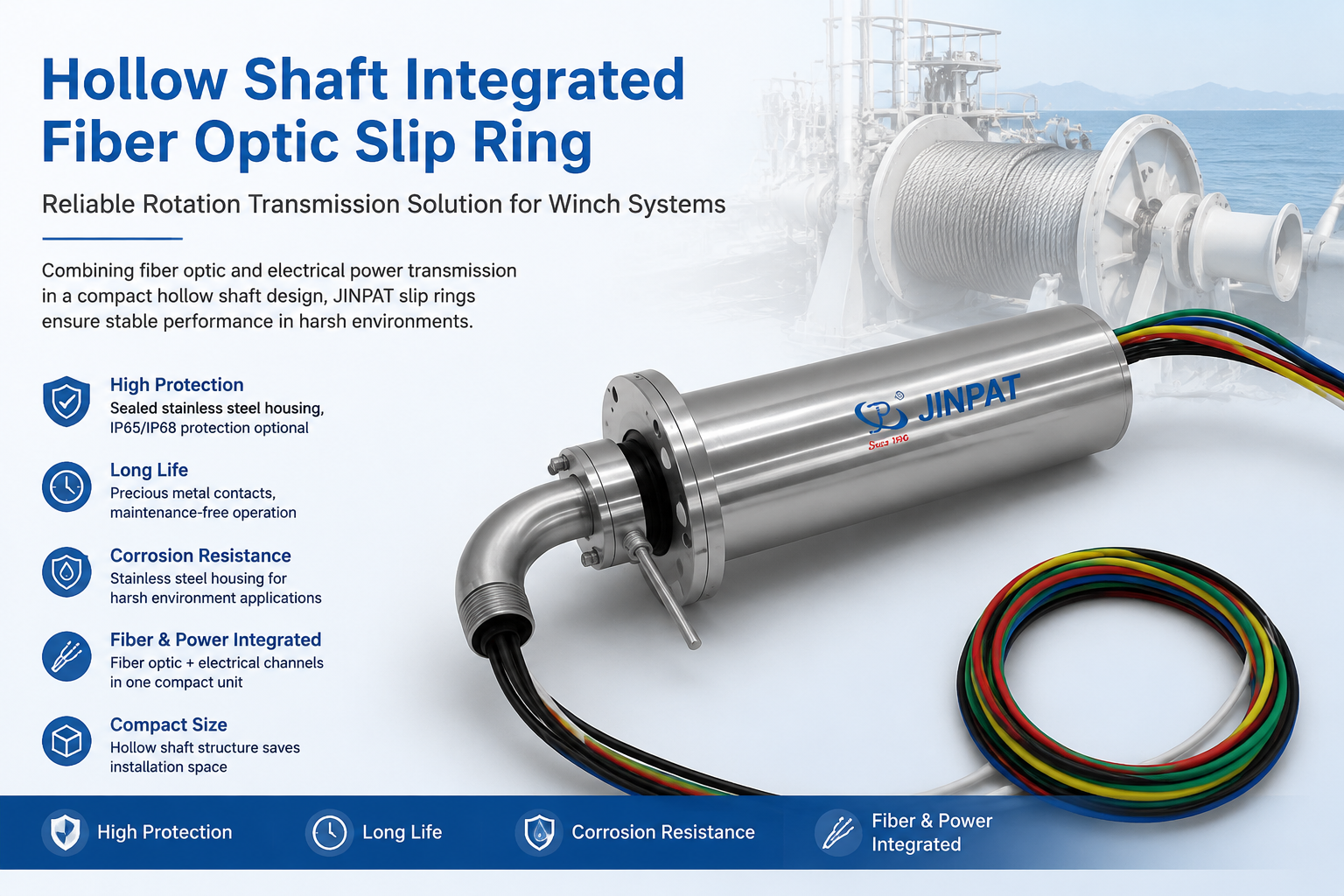
JINPAT offers cutting-edge solutions with its integrated high-frequency (HF) slip rings, designed to withstand Mexico's coastal climate.
The modernization of Mexican ports requires the transmission of large volumes of data (HD video, PLC control signals) through rotating interfaces in real time.
Interference and Noise: High-voltage power signals can interfere with data. JINPAT LPT000 models are designed with special shielding to prevent packet loss.
Salt Corrosion: Humid, salty air can destroy electrical contacts in weeks. Our collectors use precious metal alloys and housings with high-resistance coatings.
One of our most representative designs for the logistics sector is the LPT000-0308-0204-16S-HF01. This model is a masterpiece of compactness:
High Frequency Integration: Includes a dedicated high frequency (HF) channel, ideal for radars, communication antennas, or ultra-high definition video transmission on cranes.
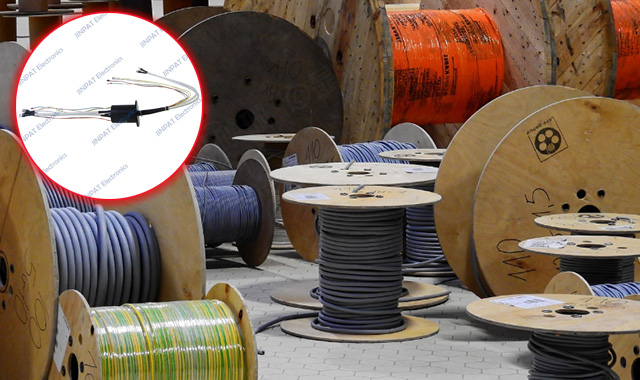
Design for Cable Reels: Its compact structure allows for easy installation on the shaft of cable reels without taking up excessive space.
Gigabit Ethernet transmission: Supports high-speed network protocols with a minimal bit error rate (10-9), ensuring that crane control is precise and safe.
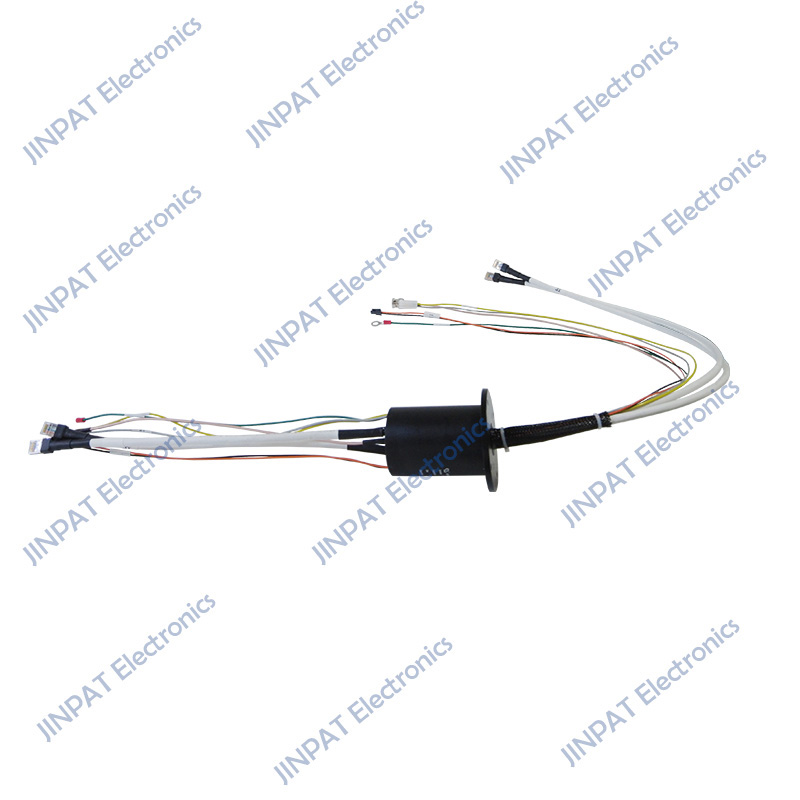
JINPAT brings world-class engineering to system integrators in Mexico.
CE and RoHS certification: We comply with all safety standards required for international port tenders.
Voltage versatility: Designed to operate in industrial environments ranging from 400V to 600V, typical in heavy port machinery.
Simplified Maintenance: Contacts designed for long life (up to 20 million cycles under optimal conditions), reducing port downtime.